















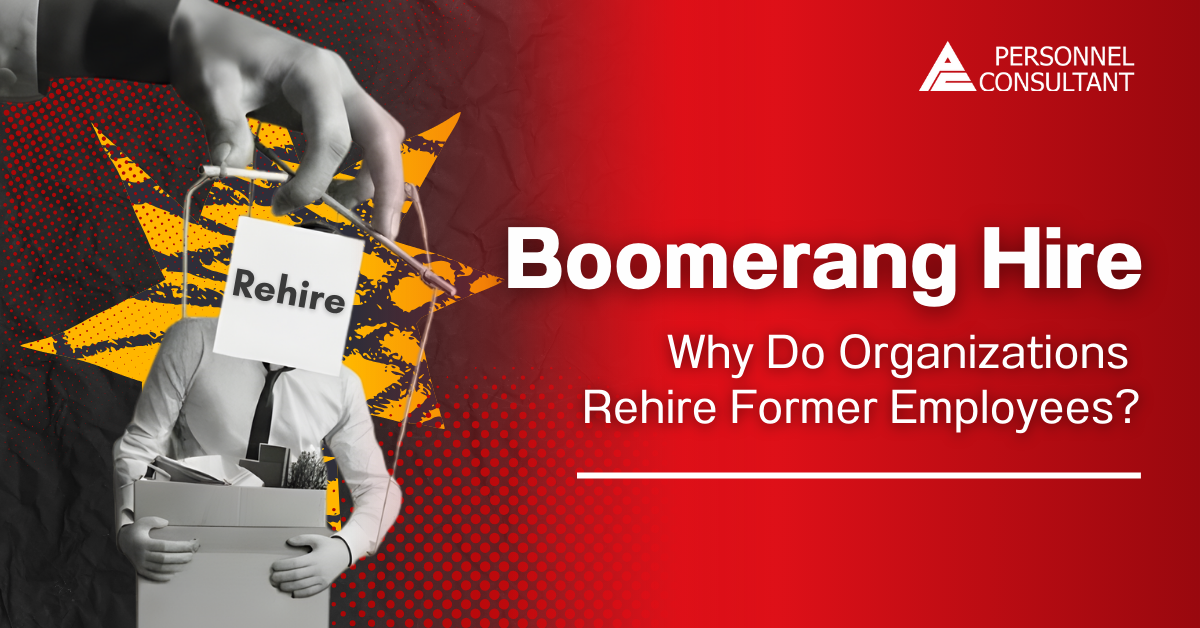
Boomerang Hire : Why Do Organizations Rehire Former Employees?
In today’s highly competitive labor market, recruiting new employees with the right skills requires significant time and resources. As a result, many organizations are turning to Boomerang Hiring as a strategic solution.
Boomerang Hire refers to the practice of rehiring former employees—often called Boomerang Employees—who previously left the organization and later chose to return. This hiring approach has rapidly gained popularity as an effective recruitment strategy adopted by many organizations.
Advantages of Boomerang Employees
1. Reduced Recruitment and Training Costs
Boomerang employees require significantly less time to adapt, as they are already familiar with the company culture, organizational structure, internal systems, and colleagues. As a result, onboarding and skill training can be shortened, allowing organizations to reduce training costs while enabling employees to become productive almost immediately—especially in roles requiring specialized expertise.
2. Bringing Back New Skills and Fresh Perspectives
When former employees leave to work elsewhere, it is not necessarily a loss—but an opportunity for growth. Upon returning, they bring back new knowledge, skills, and best practices gained from other companies or industries. These external insights often contribute to innovation and process improvement.
Having experienced different work environments also allows them to assess the organization more objectively and propose fresh, practical solutions.
3. Lower Hiring Risk
Hiring new employees always involves uncertainty—whether they will fit the organization or perform as expected. Boomerang employees, however, come with proven performance records and prior experience within the organization, enabling more confident and data-driven hiring decisions. Their existing emotional connection and engagement with the organization often lead to stronger long-term commitment.
4. A Strong Signal of a Positive Organizational Culture
The return of former employees reflects a healthy organizational culture and a supportive work environment—whether in terms of workplace relationships, management, or employee benefits. Moreover, welcoming back familiar colleagues helps boost morale and strengthens trust among current employees.

Key Considerations and Best Practices for Organizations
Despite its many advantages, boomerang hiring requires careful management to avoid creating inequality or dissatisfaction among existing employees.
1. Ensure the Right Exit Reasons. Organizations should consider rehiring only former employees who left on positive and reasonable grounds—such as career development, further education, or family reasons—and who demonstrated strong performance and professionalism during their previous tenure.
2. Communicate with Transparency. Be clear about how the organization has addressed the issues that originally led to the employee’s departure, and explain what new opportunities, responsibilities, or roles the returning employee will take on.
3. Manage Compensation Fairly. Boomerang employees may sometimes receive higher salaries than long-serving staff due to rising market rates. HR must implement fair and well-communicated compensation strategies to ensure internal equity and prevent feelings of unfair treatment among current employees.
4. Maintain a Healthy Workplace Culture. Rehiring former employees can affect team dynamics. In some cases, returning staff may assume they “already know everything,” becoming resistant to new ideas or changes introduced during their absence. This can lead to conflict or collaboration issues. HR should proactively plan onboarding, mindset alignment, and change management to ensure smooth reintegration.
Key Criteria for Selecting Boomerang Employees
1. Relevant Expertise and Specialized Skills. Boomerang employees should possess skills that directly match the organization’s current needs, particularly in specialist roles. Their familiarity with the business enables faster onboarding and reduces training time—especially in positions requiring accumulated knowledge, such as Sales, Engineering, Project Coordination, and Japanese Interpretation.
2. Strong Leadership Capability. Leadership remains one of the most sought-after skills. The ability to make decisions, take ownership, and manage situations effectively contributes significantly to organizational growth and long-term success.
3. Positive Attitude and Growth Mindset. A strong attitude and growth mindset are critical evaluation factors for HR—often even more important than technical skills. These qualities indicate adaptability, openness to learning, and long-term potential.
Rehiring former employees—commonly known as boomerang hiring—is becoming an increasingly popular strategy among organizations worldwide, including Japanese and multinational companies in Thailand. This approach helps reduce recruitment costs, shorten training time, and accelerate productivity.
However, boomerang hiring is not simply about “welcoming back familiar faces.” It requires a comprehensive evaluation of past performance, attitude, previous reasons for leaving, team readiness, and the relevance of skills to the organization’s current context.
When executed thoughtfully and transparently, boomerang hiring can be a powerful strategy to strengthen teams while saving time and costs. Ultimately, a boomerang hire will truly succeed only when both the organization and the employee are ready to move forward together in a new direction—not by returning to old ways of working.
References: Humansoft , Humanica
About us

Personnel Consultant , We’re Japanese recruitment company in Bangkok. We has been in the business of recruiting Thai and Japanese talent for 30 years.
Companies looking for talent & staffing , please contact us through this form Click
Tel.02-2608454
Email : jobs@personnelconsultant.co.th
Contact & Follow Us