













Burnout Syndrome in the Workplace: How Should HR Respond?
More organizations today are becoming aware of Burnout Syndrome, often referred to as workplace burnout. This issue is not limited to a particular profession. It can affect employees across almost every industry, especially in environments where pressure and workloads are consistently high.
For HR professionals, this has become an important topic. Burnout doesn’t only affect employee well-being. It can also reduce productivity and affect team morale.
Understanding the signs of burnout and responding to it appropriately is therefore an important part of building an organization that can grow and perform effectively.
What is Burnout Syndrome?
Burnout Syndrome is a condition that develops from prolonged workplace stress. Over time, employees may begin to feel physically and emotionally exhausted. Some may lose motivation, feel drained, or struggle to maintain the same level of enthusiasm they once had at work.
Burnout does not mean that a person is lazy or lacking responsibility. Rather, it is often a signal that the balance between work and personal life may have started to shift.
Today, many organizations around the world are placing greater importance on employee well-being. They recognize that supporting employees’ mental health and helping them maintain energy at work are essential factors in achieving long-term success.
Signs of Burnout HR Should Watch For
Although burnout is something that happens internally, there are certain behaviors that others in the workplace may notice.
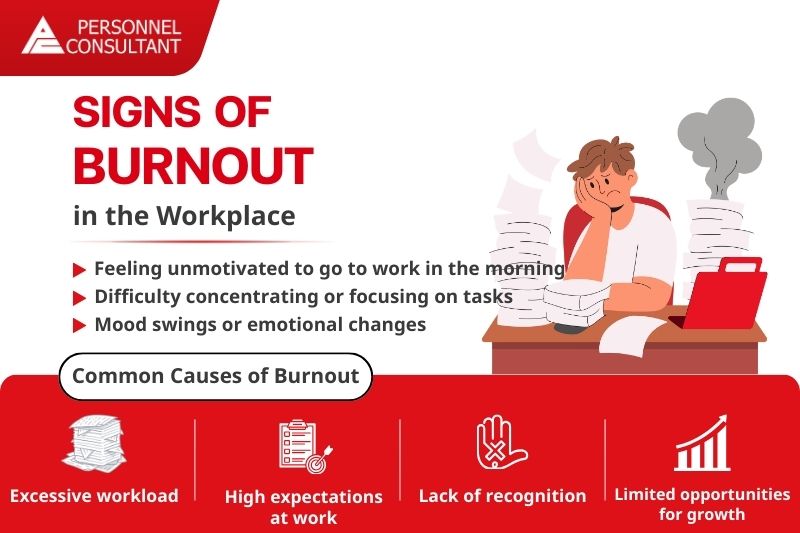
Some common signs include
- Employees appearing constantly tired or lacking energy at work
- A noticeable decline in work performance
- Feeling less connected to their work or their team
- Increased stress levels or visible mood changes
If these signs begin to appear, open conversations and active listening can help organizations better understand the situation and prevent the problem from becoming more serious.
Common Causes of Burnout in the Workplace
Burnout rarely comes from a single issue. It is usually the result of several factors that build up over time.
Some common causes include
- Heavy workloads or long working hours without sufficient breaks
- Continuous pressure from high expectations over a long period
- Unclear communication within teams or between departments
- Feeling that one’s efforts are not recognized or appreciated
- Limited opportunities for career growth or professional development
When several of these factors occur at the same time for an extended period, employees may begin to feel exhausted and lose motivation in their work.
Many organizations are also beginning to recognize the connection between burnout and employee engagement. When employees experience ongoing stress for a long period, some may start considering new career opportunities. This can affect work continuity and employee retention in the long run.
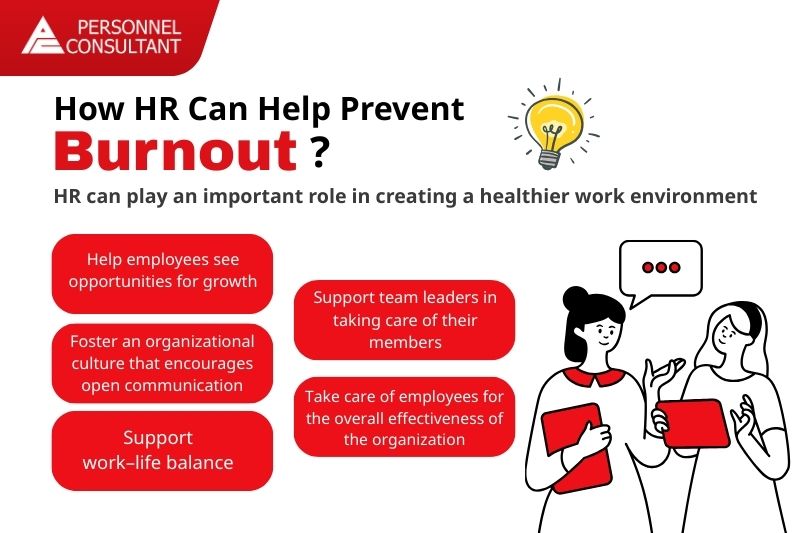
Once organizations become aware of this issue, taking steps to prevent burnout becomes increasingly important. HR can play a key role in creating a healthier work environment, such as encouraging open communication where employees feel comfortable sharing their thoughts about work, and regularly checking in on team workloads and working conditions.
At the same time, supporting work–life balance, managing workloads appropriately, and helping employees see opportunities for growth can reduce the risk of burnout and support a healthier team environment.
How HR Can Help Prevent Burnout
While burnout can be complex, HR plays an important role in creating a supportive and balanced workplace.
Build a culture of open communication
Encouraging employees to share feedback and discuss challenges openly can help organizations understand issues early and address them more effectively.
Support work–life balance
Reasonable working hours, flexible work arrangements, and allowing employees to take proper breaks can significantly reduce accumulated stress.
Help employees see opportunities for growth
When employees feel that they are developing and progressing in their careers, they are more likely to stay motivated and engaged at work.
Encourage leaders to support their teams
Managers have a strong influence on workplace culture. When leaders communicate clearly, understand their teams, and provide support when needed, it can greatly reduce pressure within the workplace.
Supporting Employees Is a Long-Term Investment
Preventing burnout is not only about providing benefits or well-being programs. It also plays an important role in an organization’s long-term performance.
Organizations that genuinely care about employee well-being often experience positive outcomes, such as improved workplace atmosphere, stronger collaboration within teams, and better employee retention.
When employees feel valued and supported, they are more likely to stay engaged and grow alongside the organization with confidence.
Frequently Asked Questions
What is Burnout Syndrome?
Burnout Syndrome is a state of physical and emotional exhaustion caused by prolonged work-related stress. It often results in fatigue, low motivation, and a lack of energy at work.
What are the signs of burnout in the workplace?
Common signs include constant fatigue, reduced work performance, loss of motivation, and feeling disconnected from work or the organization.
What causes burnout at work?
Common causes include excessive workloads, long-term stress, poor work–life balance, and the feeling that one’s efforts are not recognized.
How can HR help prevent burnout in organizations?
HR can support employees by promoting a healthy work environment, encouraging open communication, supporting work–life balance, and providing opportunities for professional growth.
How does burnout affect organizations?
Burnout can impact productivity, employee engagement, and team morale. Addressing burnout effectively can help organizations build stronger and more stable teams over time.
Referred sources : Humansoft, Hrnote, Medparkhospital, BangkokHospital, JobsDB
About Us

We are a Japanese recruitment company based in Bangkok, with over 30 years of experience in recruiting Thai and Japanese professionals.
For companies seeking talent acquisition or staffing solutions, please contact us using the form below.
Contact us https://www.personnelconsultant.co.th/en/contact/
Tel. : 02-2608454
Email : jobs@personnelconsultant.co.th
Contact & Follow Us